December 09, 2025

HISTÓRIA ANCIENTE DO BRASIL

PLEISTOCENO EM TODO O TERRITÓRIO

A teoria tradicional da chegada do homem às Américas pelo Estreito de Bering — datada entre aproximadamente 150 mil e 100 mil AP e associada à chamada Teoria de Clóvis (Agência Fapesp) — vem sendo amplamente questionada por diversas descobertas brasileiras. Um exemplo marcante é o achado de um fóssil de Ancylostoma duodenale com datação de 7750 AP, um parasita que não poderia ter sobrevivido às condições da travessia pela Beríngia. Isso sugere levas migratórias que chegaram às Américas pelo Pacífico (através de correntes Malásio-Polinésias oriundas do Sudeste Asiático ou de rotas australianas vindas do Pacífico Sul) ou mesmo pela África, embora as evidências morfológicas e moleculares ponham uma fortíssima ancestralidade dos ameríndios às populações asiáticas (DaGloria, Boletim do Museu Paraense Emilio Goeldi, 2019).

Existem dezenas de possíveis testemunhos de sua passagem pelo continente. Os mais antigos são os polêmicos restos de fogueiras de São Raimundo Nonato no Piauí. Em Monte Verde, no Chile, foram encontrados sinais que sugerem presença humana há 33 mil anos. Em Old Crow, no Alasca, há vestígios datados em 27 mil anos. Em Tlapecoya, no México, acredita-se que o homem teria estado ali há 22 mil ou 24 mil anos. O único de todos esses sítios arqueológicos cuja autenticidade é aceita sem discussão pelos cientistas fica em Meadowcroft, no Estado americano da Pensilvânia, e tem 19 mil anos. Ali foram encontrados quatrocentos instrumentos de pedra lascada, ossos de várias espécies-animais, restos de fogueira e uma espécie de balaio feito de casca de árvore. Há datações mais antigas em Meadowcroft, mas ainda precisam ser comprovadas (Superinteressante).

Essas hipóteses também se apoiam em similaridades entre vestígios materiais encontrados na América e aqueles provenientes da Oceania. Achados em Minas Gerais (Lagoa Santa, Revista Fapesp) e na Bahia apresentam datas entre 25000 e 12000 AP. No sítio arqueológico Alice Boer, em São Paulo, foram identificadas artefatos como pontas de projéteis, raspadores e lesmas com idade de 8000-6000 AP (Jornal USP). Na Serra da Capivara, no Piauí, arqueólogos defendem que um abrigo com vestígios humanos de fogueira teria cerca de 41500 AP (Superinteressante), e outros artefatos recuperados no mesmo sítio ultrapassam 48000 AP. No Abismo da Ponta da Flecha, no vale do Ribeira em São Paulo, os registros de pontas projéteis, artefatos sobre lasca e raspadores são da janela de 15000 a 10000 AP (Chahud, A. et al., Journal of South American Earth Sciences, 2023).

De modo geral, muitos pesquisadores admitem hoje que o território brasileiro possa ter sido ocupado há aproximadamente 60 mil AP, especialmente considerando as evidências do Piauí. As correntes migratórias teriam alcançado Minas Gerais há cerca de 30 mil AP e o Rio Grande do Sul por volta de 15 mil AP. Toda a área que corresponde ao Brasil atual estaria ocupada por volta de 12 mil AP.

Luzia é o nome dado ao fóssil humano mais antigo encontrado nas Américas, de 11500 AP, descoberto no sítio arqueológico da Lapa Vermelha, no município de Lagoa Santa (Minas Gerais). Trata-se de um fóssil anatomicamente mais próximo dos aborígenes australianos e de populações nativas da África do que dos ameríndios clássicos, embora hoje se saiba que eram ameríndios (Jornal USP). Os estudos realizados na região habitada por Luzia e outros paleoíndios indicam que, embora provavelmente fossem sedentários, eles não conheciam a cerâmica e possuíam uma indústria lítica relativamente simples. Outro fossil, de 9600 AP chamada Zuzu, de uma índia de cerca de 30 anos de idade foi encontrado praticamente completo na Serra da Capivara (Revista Fapesp).

HOLOCENO DO NORDESTE E CENTRO DO BRASIL (12000 - 2000 AP)

Os arqueólogos denominam por fase um complexo cultural onde os elementos são intimamente associados. Por tradição, os arqueólogos entendem as práticas e técnicas padrão dos antigos para a confecção, por exemplo, da indústria lítica e da pintura rupestre.

O Holoceno (11700 até o tempo atual) é marcado pela transição da caça, pesca e coleta para a difusão de práticas agrícolas. Esse momento é caracterizado pela indústria lítica de pedra lascada — com lesmas, lascas, furadores, lâminas e fogueiras estruturadas — e por uma produção rupestre bastante intensa. Na Toca do Baixão da Perna 1, na Serra da Capivara, foram encontradas pinturas rupestres datadas de cerca de 12000 anos, cuja produção se estende até aproximadamente 5 mil anos atrás e assinalados à tradição Nordeste (Alavarenga & da Luz, Periódicos UFPE, 1987 | I Simpósio de Pré-História do Nordeste Brasileiro), e que inclui também as pinturas do Lajeado, no Rio Grande do Norte. Outras tradições importantes de arte rupestre incluem Várzea Grande (sudeste do Piauí) e Seridó (Rio Grande do Norte). Um apanhado de várias tradições do nordeste pode ser consultado em Monzon (Revista do Museu Paulista, 1982).

No Catimbau há desenhos das três tradições. O sítio de Alcobaça é totalmente dominado por pinturas da tradição Agreste, e na Loca das Cinzas predominam desenhos da tradição nordeste, que é bem mais antigae temos tambem a tradição Itacoatiara que ao invés de pinturas são gravuras rupestres (Vale do Catimbau). No Peruaçu (MG) predomina a tradição São Francisco (Blog RVC).

É provavelmente desse período (7000 a 5000 AP), e de autoria ainda desconhecida, a monumental e enigmática Pedra do Ingá, no sertão da Paraíba — uma rocha de gnaisse com cerca de 50 m de comprimento e mais de 400 petroglifos ainda não decifrados (Brito, A PEDRA DO INGÁ, 2009).

Na região central e no Nordeste, a tradição lítica Itaparica (Goiás, Minas Gerais, Pernambuco e Piauí) destacava-se pela produção de lesmas, furadores e facas, mas apresentava poucas pontas de projéteis, e divide-se em duas fases: Itaparica, a partir de 8000-7000 AP, e São Francisco, a partir de 2500 AP (Fogaça, Revista do Museu de Arqueologia e Etnologia, 1995). Os povos dessas áreas parecem ter alterado seu modo de vida por volta de 6500 AP, quando passaram a incorporar moluscos e frutos como elementos centrais da dieta. No centro do país, desenvolveu-se também uma tradição de pintura rupestre denominada Planalto.

HOLOCENO NO SUL (13000 a 2000 AP)

As datas mais antigas no Sul são atribuídas à tradição Ibicuí (13000–8500 A.P., caracterizada por artefatos simples da bacia do rio Uruguai, 3 sítios a céu aberto), à fase Uruguai (11555–8640 A.P., composta por raspadores, facas bifaciais e pontas de projéteis, 21 sítios a céu aberto), à fase Vinitu (8500–6500 AP, registrada em Santa Catarina e no Rio Grande do Sul) e à fase Humaitá (6500–2000 AP, que se estende até São Paulo e é marcada pela produção de raspadores, furadores e zoólitos), conforme Dias & Jacibus (Leia UFSC, 2013).

A fase Umbu, também da região Sul, é pouco conhecida devido à escassez de informações disponíveis.

No litoral, os principais sítios arqueológicos — os sambaquis, montes de conchas de moluscos acumulados por ação humana e que refletem a dieta das populações antigas — pertencem à tradição Itaipu. Com frequência, são encontrados nesses sítios esqueletos humanos, instrumentos líticos, restos de alimentos e outros vestígios culturais. Esses montes foram inclusive comparados a estruturas semelhantes existentes na Escandinávia. Os povos que habitavam o litoral são geralmente descritos como pescadores seminômades.

TRANSIÇÃO AGRÍCOLA/CERAMISTA NO NORDSTE, SUDESTE E SUL (4000-1500 AP)

DETALHES DE CIDADES ANTIGAS DO MATO GROSSO

O aparecimento de plantas cultivadas em Minas Gerais data de há 4 000 anos. Em São Raimundo Nonato, a agricultura parece ter sido praticada desde há pelo menos 2 090 anos. Embora a cerâmica amazônica seja mais antiga que a agricultura, o mesmo fenômeno não ocorre no resto do país, onde a cerâmica mais antiga data de há 3000 anos (na área de São Raimundo Nonato). Arqueólogos brasileiros consideram que o surgimento da cerâmica nas regiões em questão está ligado ao sedentarismo e à agricultura, uma vez que a cerâmica é de difícil transporte e, normalmente, teve a função de armazenar víveres. A tradição Taquara-Itararé é talvez a mais estudada tradição de cerâmica do país. OCUPAÇÃO DA AMAZONIA PERÍODO PRÉ-CERÂMICO DA AMAZÔNIA (12.000–3.000 A.P.) As datações mais antigas da Amazônia remontam a cerca de 12.500 A.P. Acredita-se que esses povos se alimentavam de moluscos, pequenos animais e frutos. Os sambaquis continuam sendo os principais sítios arqueológicos do período na região. COMUNIDADE PEDRA PINTADA Os grupos pré-históricos da área próxima a Santarém, no Pará, mantiveram uma economia estável e produziram uma cultura material e tecnologias bastante superiores às de suas contrapartes da América do Norte. Esses paleoíndios viviam em abrigos rochosos confortáveis e protegidos, tinham uma dieta variada e saudável, e produziram cerâmicas, pinturas rupestres e pontas de flechas. Eram caçadores de pequenos animais e coletores de frutos. No auge de sua ocupação, estima-se que tenham chegado a cerca de 300.000 indivíduos. Foram encontradas pontas de lança e fragmentos de cerâmica datados entre 10.000 e 6.000 anos. Os estudos indicam que os primeiros habitantes das Américas viveram na região amazônica entre aproximadamente 11.200 e 10.000 A.P. PERÍODO CERÂMICO INCIPIENTE (5.000–3.000 A.P.) Os indígenas passaram a viver em relativa sedentarização, ocupando várzeas e margens dos rios da bacia do Ucaiali, da ilha de Marajó, do Orinoco e do Amazonas. Praticavam horticultura de raízes, caça, pesca e desenvolveram a mais antiga cerâmica elaborada das Américas, com temas geométricos e zoomórficos, pinturas em vermelho e branco e vasos de formatos ovais e circulares. A cerâmica desse período se organiza em dois grandes conjuntos: 'Hachurado Zonado' (com duas variantes, Tutoshcainyo de 4000–2800 AP e Ananatuba de 3500–2500 AP) e 'Saldóide Barrancóide' (baixo e médio Orenoco, entre 4800-2800 AP, relacionado a incisões e pinturas em vermelho e branco). Antes se acreditava que essa cerâmica fosse influenciada pelos Andes; hoje, admite-se amplamente que ela se desenvolveu de forma autônoma no Baixo Amazonas, tendo possivelmente influenciado culturas andinas posteriormente. Assadeiras de cerâmica grossa foram identificadas nesses territórios, sugerindo o uso e possível domesticação antiga da mandioca. CACICADOS COMPLEXOS DA AMAZÔNIA (3.000–1.000 A.P.) O crescimento demográfico provocou profundas transformações nas sociedades indígenas, que se tornaram altamente hierarquizadas, com chefias centralizadas, possível presença de nobres, plebeus e servos cativos, e estruturas especializadas para enterros, cultos, trabalho e atividades de guerra. A cerâmica era extremamente elaborada, revelando domínio técnico avançado. Há registro de urnas funerárias (associadas ao culto aos chefes mortos), redes de comércio e densidades populacionais compatíveis com centros urbanos. Praticavam monocultura, caça e pesca intensivas, horticultura de raízes e armazenamento de alimentos. A introdução e difusão do milho na região datam de cerca de 3.000 A.P. A cerâmica produzida por essas civilizações é geralmente classificada em dois grandes conjuntos: o chamado Horizonte Policrômico, associado aos antepassados dos povos Caribe — incluindo os marajoaras, na foz do Amazonas, e o complexo Guarita, no Médio Amazonas, além de grupos fora da Amazônia brasileira — caracterizado por pinturas brancas, pretas e vermelhas, motivos geométricos e incisões; e o Horizonte Inciso-Ponteado, ligado aos antepassados dos povos tupi, representado em Santarém (Baixo Amazonas) e Itacoatiara (Médio Amazonas), marcado por incisões profundas e pela técnica de ponteação. Dessa época data o monumento megalítico de Calçoene (Amapá), composto por 127 rochas dispostas em círculo no topo de uma colina. Acredita-se que tenha funcionado como observatório astronômico indígena. O círculo possui 30 metros de diâmetro e pedras de granito com até 4 metros de altura. Estruturas semelhantes são conhecidas na Guiana Francesa, datadas de mais de 2.000 anos. Na mesma cronologia se destacam os geoglifos do Acre, com cerca de 410 figuras no oeste do Acre, no extremo noroeste de Rondônia e sul do Amazonas, alguns datados de 2.500 A.P. KUHIKUGU (1.500–400 A.P.) Uma das civilizações amazônicas de maior porte foi Kuhikugu, construída pelos antepassados dos atuais povos Kuikuro e localizada no Parque Nacional do Xingu. Descoberta pelo arqueólogo Michael Heckenberger, a região pode ter abrigado até 50 mil habitantes. O complexo inclui estradas, fortificações, paliçadas e trincheiras defensivas. Evidências indicam cultivo de mandioca, dada a proximidade com sua área de domesticação. O desaparecimento desse sistema urbano, como de outras sociedades amazônicas, está associado ao impacto das epidemias trazidas pelos europeus por volta de 1500 d.C. MONTE DO TESO DOS BICHOS (400 a.C.–1300 d.C.) O Monte do Teso dos Bichos, ou Tesos Marajoaras, localizado na ilha de Marajó, corresponde ao centro de uma das civilizações mais complexas da Amazônia pré-cabralina, ocupando cerca de 2,5 hectares. Seus “tesos” — grandes aterros artificiais destinados a moradias — provavelmente serviam para evitar inundações. São estruturas monumentais essenciais para compreender o passado marajoara. Estima-se que a população dessa civilização tenha alcançado cerca de 500 mil habitantes. Tratava-se de uma sociedade chefiada por tuxauas, com divisão de trabalho entre homens e mulheres, dieta rica em proteínas animal e vegetal e bebidas fermentadas, como o aluá. Em 2009, um grupo de geólogos sugeriu que os tesos poderiam ter se formado a partir de elevações naturais ampliadas por processos fluviais, com indícios de ocupação humana apenas nas camadas superiores. Essa hipótese reduziria a escala de investimento humano na construção dos aterros. Arqueólogos que defendem a origem antropogênica contestaram essa interpretação, destacando falhas de amostragem e dados que apontariam para obras humanas extensas. INCAS NO BRAZIL E PEABIRU Embora o Império Inca fosse tradicionalmente localizado nos Andes (Peru, Bolívia, Equador etc.), há evidências arqueológicas e teorias que sugerem uma presença ou influência inca no Brasil, particularmente em Rondônia, com ruínas de cidadelas e altares. Além disso, a antiga Trilha de Peabiru — uma rota que conectava os Andes ao litoral brasileiro, utilizada tanto por incas quanto por exploradores — indica uma interação pré-colonial significativa, desafiando a ideia de que os incas jamais chegaram ao Brasil. Pesquisadores apontam para a descoberta, em Alta Floresta d’Oeste (O Varadouro/Amazônia Misteriosa), próxima ao rio Guaporé, de alguns andenes (terraços agrícolas) e estruturas megalíticas (talhadas em forma de pilões, com circunferência média de 32,6 cm e profundidade média de 16 cm, semelhantes a outros altares encontrados em Machu Picchu e Poro Poro, Cajamarca — ambos no Peru — bem como em alguns locais na Colômbia). Em Costa Marques, identificaram-se também muros e “labirintos” (ver abaixo), ambos no estado de Rondônia, sugerindo a presença ou passagem inca na região, conectando a Amazônia à civilização andina. O Labirinto da Bahia Redonda está localizado próximo ao Real Forte Príncipe da Beira, no município de Costa Marques, Rondônia, a cerca de 4 km do forte. Consiste em um conjunto de estruturas de pedra empilhadas que formam extensos muros de mais de 2,5 metros de altura. Em uma das áreas, há um portal de pedra com aproximadamente 1,2 m de altura. A estrutura labiríntica se estende por cerca de 1.850 m. Hoje, toda a área encontra-se coberta pela mata (Portal Amazônia). O Peabiru é uma rede ancestral de trilhas com mais de 3.000 anos que conectava os oceanos Atlântico e Pacífico, atravessando Brasil, Paraguai e Bolívia, e chegando até o Peru (com alguns ramais alcançando Mato Grosso do Sul, Argentina e Rio Grande do Sul, Atlas do Chão). Essa rede é altamente controversa, marcada por disputas entre órgãos governamentais, organizações civis, historiadores e autoridades (IELA/UFSC), e fortemente alimentada por teorias e especulações. Os mapas existentes da rota são vagos, e levantamentos rigorosos ainda estão em andamento (Blog Caiçara). Em Santa Catarina, o Peabiru é associado à saga de Aleixo Garcia, que partiu de Palhoça rumo aos Andes e é frequentemente citado como o primeiro europeu a alcançar o Império Andino (Cultura UOL | DW). No estado de São Paulo, acredita-se que o Peabiru tenha se ramificado pelas regiões sul e central, estendendo-se por até 5.000 km (Melhores Destinos). No Paraná, os esforços de mapeamento são mais avançados, produzindo uma rota mais detalhada que inclui 97 municípios (Caminhos do Peabiru | MAP). Já as rotas do Peabiru no Paraguai, Bolívia e Peru permanecem desconhecidas ou altamente imprecisas. Contudo, nem todos reconhecem o Peabiru como algo legítimo. O Instituto Nacional de Cultura do governo do Peru realizou um extenso estudo do Qhapaq Ñan, o Sistema Viário Inca, durante sua candidatura à Lista do Patrimônio Mundial da UNESCO. Segundo sua avaliação, o Peabiru nunca existiu; jamais houve uma rota conectando o Brasil aos Andes. Para eles, o Peabiru não passa de uma lenda, já que nenhum artefato arqueológico ou documento histórico foi encontrado que confirme sua existência ou descreva seu itinerário (Campo Grande News).

PERÍODO PRÉ-CABRALINO RECENTE (0 - 500 DC)

Não há consenso sobre quantos indígenas habitavam o território do atual Brasil em 1500, com estimativas variando de 2 a 8 milhões (Superinteressante | Fapesp | Multi-Rio). Eles são geralmente descritos como pertencentes a quatro grandes grupos, embora seja possível identificar oito com alguma precisão — sem contar aqueles que não pertenciam a nenhum deles: Tupi-Guarani, Gê, Arawak, Karib, Kariri, Pano, Tukano e Charrua.
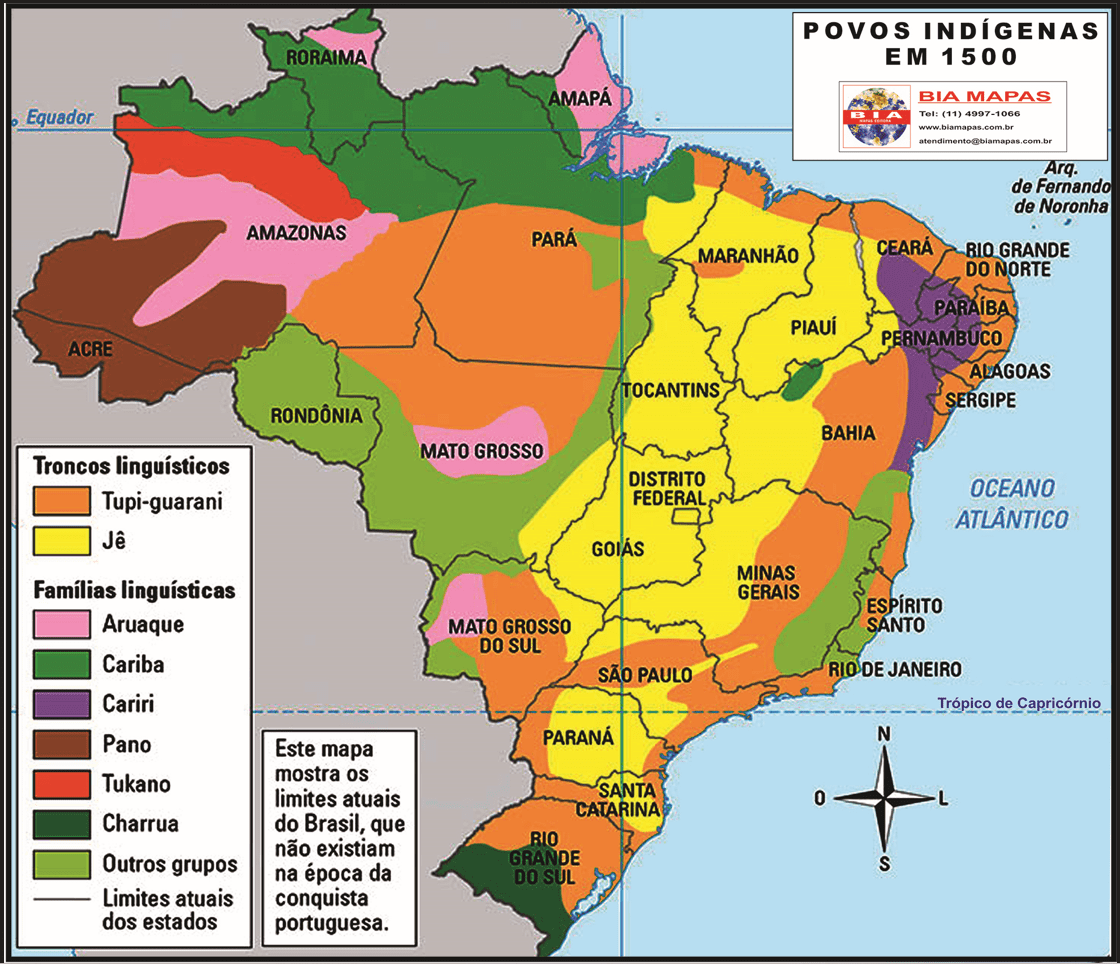

MAPA DOS POVOS INDÍGERAS DO BRASIL NA ÉPOCA DO DESCOBRIMENTO

November 13, 2025

BRASIL: NOTAS SOBRE MONTANHAS, TERREMOTOS E A ILHA DO MARAJÓ

Nesta postagem, abordaremos três temas que precisam ser esclarecidos para fundamentar discussões deste blog e de projetos irmãos: a nomenclatura de montanhas, a listagem correta dos maiores terremotos do Brasil e a verdadeira linha de tensão da Ilha do Marajó.


MONTANHAS

No campo da geografia física, poucos temas geram tanta confusão quanto a definição precisa de montanhas e de seus pontos culminantes. Termos como chapadas, serras, montes, maciços e picos costumam ser usados de forma indistinta ou ambígua, criando incerteza e fragilidade na hora de nomear esses elementos do relevo. A situação se complica ainda mais quando se tratam de pontos culminantes individuais: em torno do Everest, por exemplo, existem dezenas de protuberâncias topográficas que poderiam ser consideradas “picos” mais altos que o K2, o que faz com que os supostos 10 ou 20 maiores pontos culminantes do planeta se concentrem todos na mesma área — algo que, do ponto de vista nomenclatural e conceitual, não faz sentido algum.

O uso do termo pico para definir esses elementos geográficos é problemático, pois muitos maciços apresentam vários picos tão próximos e integrados entre si que não podem ser considerados unidades independentes. Além disso, algumas feições topográficas nem sequer possuem um pico distinto, como ocorre no Monte Roraima ou na Pedra da Mina. A palavra monte também gera conflitos, já que diversas formações que recebem esse nome não atendem aos critérios esperados para um “monte” propriamente dito — o prórpio Monte Roraima, por exemplo, não se enquadra nessa categoria de forma rigorosa.

A nomenclatura das montanhas e dos pontos culminantes do Brasil é amplamente conflituosa e ignora, em muitos casos, o critério da distinguibilidade entre os elementos. O Pico 31 de Março, por exemplo, é topograficamente indistinguível do Pico da Neblina, mas ainda assim é tratado como o 2º mais alto ponto culminante do país. O mesmo ocorre com o Pico do Calçado e o Pico do Cristal, que não se diferenciam de forma topográfica do Pico da Bandeira, embora apareçam entre os dez maiores pontos culminantes do país. Situação semelhante se observa na Serra do Itatiaia: a Pedra do Sino do Itatiaia e o Morro do Couto não podem ser distinguidos topograficamente do Pico das Agulhas Negras como unidades autônomas, embora frequentemente sejam listados como tais.

Para evitar essas inconsistências e trabalhar apenas com unidades realmente distintas, propomos aqui o conceito de pontos maximais: os pontos mais altos de unidades topográficas que podem ser diferenciadas de forma objetiva, onde cada unidade é monorrepresentada por seu ponto de maior altitude. A partir desse critério, o Pico da Neblina e o Pico 31 de Março passam a ser entendidos como parte de uma mesma unidade topográfica (um excelente texto que já versava sobre a insuficiência do 31 de Março pode ser visto em Alta Montanha), cujo máximo de relevo é o próprio Pico da Neblina. Da mesma forma, o Pico do Calçado, o Pico do Cristal e o Pico da Bandeira pertencem a uma única unidade, representada pelo máximo de relevo correspondente — o Pico da Bandeira. E assim sucessivamente para os demais casos.

A delimitação entre unidades topográficas pode ser simples em alguns casos, mas também pode gerar confusão, especialmente quando envolve feições que recebem múltiplos nomes — montanha, monte, pico, serra, tepui, chapada, entre outros. Quando houver ambiguidade, a análise necessariamente envolve certa subjetividade e depende do bom senso, não sendo objetivo deste texto aprofundar tais critérios. Dentro dessa perspectiva, a nomenclatura de pontos maximais deve ter prioridade sobre outras designações referentes a pontos mais altos, como 'pontos culminantes', 'picos culminantes' ou 'montanhas mais altas'.

Nestes termos, podemos então listar os pontos maximais do relevo do Brasil — levando em conta a numeração da lista destaca em Wikipedia para os 15 primeiros da lista e seus equivalentes — na ordem:

1. Pico da Neblina (2995m, 1º e 2º) ‣ inclui o Pico 31 de Março (2º, 2974m).

2. Pico da Bandeira (2891 m, antigo 3º) ‣ inclui o Pico do Calçado (4º, 2849m), Pico do Cristal (7º, 2769m), Morro da Cruz do Negro (13º, 2658m) e Pico do Tesouro (14º, 2620m).

3. Pedra da Mina (2798 m, antigo 5º)

4. Pico das Agulhas Negras (2791m, antigo 6º) ‣ inclui o Morro do Couto (9º, 2680m), a Pedra do Sino do Itatiaia (10º, 2670m) e o Pico do Altar (12º, 2665m).

5. Monte Roraima (2734m - porção brasileira)

6. Pico dos Três Estados (2665m, antigo 11º) ‣ apesar de seu pico estar a apenas 5 km do pico da Pedra da Mina, ele é suficientemente distinto devido a um profundo vale separando ambos.

7. Pico Santo Agostinho ou Garrafão (2425m, antigo 15º) ‣ maior máximo de relevo brasileira inteiramente contida num mesmo estado.

8. Pico dos Marins (2421m, antigo 16º)

9. Pico Maior de Friburgo (2366m, antigo 17º)


TERREMOTOS DO BRASIL APÓS 2017

Um tema especialmente marcado por desinformação, listas conflitantes, dados imprecisos e até certo sensacionalismo é o dos terremotos no Brasil. Diferentes plataformas — muitas delas internacionais — divulgam registros de supostos eventos acima de 7 graus na escala Richter em território brasileiro, frequentemente com datas que não correspondem às reportagens da imprensa. Esta, por sua vez, também contribui para ampliar a confusão sobre o real histórico sísmico do país.

Entre as referências mais citadas estão Biggest Earthquakes Near Brazil (BE, Earthquaketrack), que atribui 23 terremotos ao Brasil com magnetude acima de 6, e Latest earthquakes near Brazil today (LT, Brazil Earthquake Report), que aponta 5 ocorrências no país. Embora mantidas por instituições respeitáveis, ambas apresentam inconsistências importantes. Para trabalhar com dados consolidados e tecnicamente mais confiáveis, adotamos aqui a compilação de Preve, D’Espindula(b) e Valdati (Geografia Física e Desastres Naturais, 2017), que reuniu todos os terremotos superiores a 5 Mb (Magnitude de Ondas de Corpo) registrados no Brasil entre 1900 e 2017, e os dados das plataformas supracitadas para dados após 2017: LT com M6.8/050119 (Tarauacá, VER), M6.6/200124 (Ipixuna, VER), M6.5/280124 (Tarauacá, VER), M6.5/070622 (Feijó, VER); e BE com M6.8/05012019 (Tarauacá, VER), M6.6/20012024 (Ipixuna, VER), M6.5/08062022 (Feijó, VER), M6.5/28012024 (Tarauacá, VER).


ILHA DO MARAJÓ

A classificação da ilha do Marajó apresenta ambiguidades porque se trata de uma ilha fluviomarinha com uma complexa rede hidrográfica em sua porção sudoeste. Nessa região, canais, furos e regatos interconectam os fluxos de água e acabam gerando novas ilhas. Ainda não há discussão científica consolidada sobre se essas ilhas secundárias podem ser consideradas unidades independentes da ilha principal.

Neste texto, adotamos o entendimento de Marajó em sua extensão integral, delimitando-a, pelo sudeste, pelo Furo dos Macacos — cuja profundidade e dinâmica de fluxos justificam essa fronteira. Os cursos d’água de menor profundidade presentes no interior da ilha são aqui tratados como elementos secundários, insuficientes para redefinir ou fragmentar o conceito da ilha do Marajó.

June 05, 2024

THISMIA FROM BRAZIL

Thismia Griff. Myco-heterotrophic small herbs, typically growing among leaf litter on the shady wet forest floor; root system tuberous or rarely cylindrical, roots filiform; stems unbranched; leaves (2-)4, alternate, scale-like, sometimes forming a rosette just below the flower; flowers terminal, solitary, 5-20 mm long, bisexual, actinomorphic to sometimes zygomorphic, fruit cup-shaped, fleshy; seeds many, small and ‘dustlike’, (narrowly) ellipsoid to ovoid. 108 spp., 84 in tropical and temperate Asia, 24 in the New World, 23 in South America, 20 in Brazil, 13 endemics; two subgenera.

A. subg. Ophiomeris ▸ Neotropical Thismia; 23 spp. in three sections; all species in Brazil except T. saulensis H.Maas & Maas from French Guiana, T. paradisiaca Guzman & Toro and T. andicola Aguilar-Cano, S. Guzman-Guzman & Lopera-Toro from Colombia.

▪ sect. Myostoma ‣ a single species, T. hyalina (Miers) Benth. & Hook.f. ex F.Muell. in Brazil (Acre, Amazonas, Mato Grosso, Pará, Rio de Janeiro and São Paulo states) and Peru.

▪ sect. Ophiomeris ‣ 15 spp., 12 in Brazil, 8 endemics: T. mantiqueirensis Engels & E.C.Smidt., T. janeirensis Warm., and T. macahensis (Miers) F.Muell. are restricteds to São Paulo, Rio de Janeiro and Espírito Santo states in SE Brazil, T. luetzelburgii Goebel & Suess. occur in SE Brazil disjunct in Panamá, T. glaziovii Poulsen disjunct in SE Brazil and SE Colombia, T. prataensis Mancinelli, C.T.Blum & E.C.Smidt and T. cordata D.F.Silva & J.M.A.Braga endemic to Paraná state, SE Brazil, T. variabilis D.F.Silva, Honório & J.M.A.Braga are endemic to Acre state, N Brazil; T. calcarata D. F. Silva, Honorio & J. M. A. Braga in Acre state in Brazil up to Peru; T. panamensis (Standl.) Jonker known in Brazil in Paraná state, also in Bolivia, Ecuador, Colombia, Costa Rica and Panamá, T. violacea D.F.Silva & J.M.A.Braga endemic to Goiás state (Brazil); T. paradisiaca Guzman & Toro and T. andicola Aguilar-Cano, S. Guzman-Guzman & Lopera-Toro endemics to Colombia, and T. saulensis H.Maas & Maas endemic to center French Guiana.

▪ sect. Pyramidalis ‣ 7 spp., all but two endemics to Brazil: T. caudata Maas & H.Maas and T. fungiformis (Taub. ex Warm.) Maas & H.Maas are rare species in SE Brazil; T. melanomitra Maas & H.Maas known from the Ecuador, and Mato Grosso and Pará states in Brazil; T. pseudomelanomitra D.F.Silva & J.M.A.Braga, T. ribeiroi Engels, D. Ferreira-da-Silva & Soares-Lopes and T. petasiformes D.F.Silva & J.M.A.Braga are endemics to N Mato Grosso state in Brazil, in Amazon forest; and T. singeri (de la Sota) Maas & H.Maas is known from Pará and N Mato Grosso in Brazil, Mamore Basin in Bolivia and Napo region of Ecuador.

BRAZILIAN THISMIA'S DIVERSITY DISTRIBUTIONS

B. subg. Thismia ‣ 85 spp., one endemic to U.S.A., T. americana N.Pfeiff. collected few times near Chicago, U.S.A. (latter in 1917), remaining 84 in tropical Asia to Australia and Tasmania.


Thismia hyalina (Kamer & Maas, FFESP, 2016; NHM; iNaturalist), T. singeri, T. ribeiroi, T. melanomitra (Silva et al., Phytotyaxa, 2020), T. petasiformis (DF. Silva, Phytotaxa, 2022), T. panamensis (Sousa, CheckList, 2021), T. prataensis (Mancinelli et al., Systematic Botany, 2012), T. cordata (Silva et al., Phytotaxa, 2021), T. caudata, T. espirito-santensis, T. fungiformes, T. macahensis (Plantas Raras do Brasil, UEFS, 2009), T. mantiqueirensis (M.E.Engels, Phytotaxa, 2022). T. janeirensis, T. glaziovii, T. luetzelburgii (Reflora)

.

May 08, 2024

ANGIOSPERMS OF BRAZIL: A HABIT SYNOPSIS✅

UPDATE IN 29.09.2024

Brazil have around 33,379 spp. of described angiosperms, with over 18,000 endemics, showcasing an exceptional diversity of adaptation forms in soil, freshwater, coastal environments, and upon other plants. Here, we propose to classify the country's plant diversity into 50 categories of vegetative forms, based on extensive bibliographic research.

The vast majority of Brazil's angiosperm diversity fits into ordinary terrestrial forms of (1)tree, shrub, epiphytes, lianas, and herbs. Trees range from measly 2cm to 88m meters (Dinizia excelsa), exhibiting various patterns of branch architecture, leaves, barks, flowers (many cauliflorous, some flagelliflorous), and fruits; their leaves span from afilous species to Coccobola gigantifolia, with simple leaves reaching up to 3m in width. Similar patterns are observed with shrubs and herbs. Lianas, in turn, can be flexible, like in Cucurbitaceae and Convolvulaceae, and woody, like some Fabaceae. This category also includes a significant portion of terrestrial hemiparasites, as in Krameriaceae, Orobanchaceae, and Santalales.

Some variants of shrubs stand out: the (2)branching xilopodics, with underground organs, notable examples in Brazil like Anacardium, Jacaranda, and Stryphnodendron; the ultra rare (3)non-branching xilopodics, like Sinningia helioana, where leaves grow directly from the bulb; (4)caudiciforms, deriving from herbs but creating a woody base, like some Bulbostylis and many Cryptanthoids; (5)hyper-thorny, sometimes leafy, with extreme forms like Quiabentia, Colletia, and Discaria in Rhamnaceae; (6)cushions, sparsely represented in Brazil, with notable examples in Paepalanthus; (7)non-Cactaceae succulents, in Brazil represented by Portulaca, some Peperomia and Euphorbia; rare (8)spiny succulents non-Cactaceae, like Diosocorea basiclavicaulis; (9)ephedroid, sparsely represented in Brazil but identified in Polygonum, Orthosia, and some Spigelia; (10)dracenoid, with notable examples in Brazil being Vellozia and Cordyline; (11)ground rosettes, spiny or not, well represented in Brazil by many Bromeliaceae, Furcraea, Orectanthe, and Eryngium; (12)caulirosules, with the most notable example in Brazil being Prestelia and some Microlicia; and (13)phyllocladoids, like some Phyllanthus and Brasiliopuntia.

The most notable tree variants are the forms (14)cecropioids, well represented by Cecropia, and (15)mangrove species, which migrated to the partially saline environment on the coast, with representatives of Rhizophora, Conocarpus, Laguncularia, and Halairanthus in Brazil.

Some plants, between shrub and tree size, have assumed a (16)candelabriform non-cacti aspect, with leaves at the extreme branches, as seen in some Merianthera, Jatropha, some Caricaceae, Hyptis, Wunderlichia and Mimosa.

Among herbs, they can be as tiny as Lepuropetalum at 2cm in diameter to giants like Phenakospermum. Some creep in environments forming carpets, the (17)carpet-forming, like Raddiella, Micranthemum, Callisia, Elatine, and some Euphorbia and Pilea, some Convulvulaceae, Rubiaceae and Lycianthes. Others, in pre-marine environments, have assumed the (18)salicornioid habit, like Sarcocornia and Batis. Still near the sea, some have taken the (19)sesuvioid habit, like Sesuvium, Ammania, Rotala, Laurembergia, and some Gomphrena. Two other interesting categories of herbs are the (20)graminids, typical of Monocots like Tofieldiaceae, Juncaginaceae, Velloziaceae, Cyclanthaceae, Nartherciaceae, Typhaceae, Rapateaceae, Thurniaceae, Juncaceae, Cyperaceae, Poaceae, Eriocaulaceae, Xyridaceae, Commelinaceae, and Haemodoraceae; the (21)juncoid aphyllous, as seen in Glaziophyton mirabile; and the (22)bulb-bearing, like Amaryllidaceae, Asparagaceae, Orchidaceae, Iridaceae, and at least a single Pitcairnia.

(23)Giant herbs may include members of Araceae, Taccaceae, Orchidaceae, Worsleya, Eriocaulaceae, Heliconiaceae, Strelitziaceae, Maranthaceae, Cannaceae, Zingiberaceae, Costaceae, Gunneraceae, Alstroemeriaceae, and Caricaceae; whereas (24)sacciform-leaved herbs only include Saccifolium bandeirae from Mount Neblina.

Among epiphytes/lianescent, four myriad forms stand out: (24)aerial parasites, strongly represented in Loranthaceae and Santalaceae; (25)hoyoids, growing adherent to the substrate, where in Brazil some Peperomia, Constantia, Monstera, Acianthera, Marcgravia, and Codonanthe can be mentioned; (26)pendulous, like some Rhipsalidae, Dichaea and Isochilus; (27)electric-grid epiphytes, like Tillandsia recurvata; (28)negatively growing lithophytes, like Tillandsia reclinata; (29)cacti-epiphyllous, like Hatiora and many Rhipsalis; (30)strangulating, like some Ficus and Spirotheca; and (31)tank epiphytes, like many Bromeliaceae.

Some notable types include plants that encompass more than one major group, like the (32)bambusoids, which include herbaceous forms (in Orchidaceae and Marantaceae) and woody forms (like true bamboos), the (33)palmoids, including shrub-like forms like Cyclanthaceae and many Arecaceae, and tree-like forms, like most Arecaceae; and the (34)odd leaf forms forms, as ericoid, passerine, microphyllous, quandrangular or worled leaves at the stem, widely present in Brazilian savannas, found in members of Myrcia, Spermacoceae, Declueuxia, Mandevilla, Sauvagesia, Ruehssia, Minaria, Hyptis, Lychnophorinae, Lucilia, Baccharis, Agrianthus, Catolesia, Hypericum, Heteropterys, Turnera, some Linum, Moninna, Senega, Chamaecrista, Cuphea, Cambessedesia, Microlicia, Marcetia, Microtea, Caryophyllaceae, Xerosiphon, Froelichiella, Ledothamnus, Declieuxia, Deianira, Calolisianthus, and Barjonia.

All the above plants are essentially terrestrial and amphibious. Many forms are aquatic, notably the (35)floating, like Nympheaceae, Lemnoideae, Pistia, Alismataceae, Phyllanthus fluitans, Ludwigia sedoides, and Nymphoides; the (36)submerged/aerial, like Cabombaceae, freshwater Hydrocharitaceae, Potamogetonaceae, Mayacaceae, Eriocaulaceae, Pontederiaceae, Ceratophyllaceae, Ranunculus, Myriophyllum, Podostemaceae, Callitriche, Anamaria and Lilaeopsis; and the (37)sea grasses, in Hydrocharithaceae, Ruppiaceae, and Cymodoceaceae.

Cactaceae, with the exception of Pereskioideae, some forms in Opuntioideae, and epiphytic cacti, stand as separate types: (38)opuntioid, like Tacinga; (39)microglobular, like Frailea; (40)common cactoid, thin or thick, like Cereus and Facheroa; (41)macroglobular, like some Parodia, Melocactus, and Uebelmania; (42)branching, with very thin branches, like Harrisia and Arrojadoa; and (43)massive-diffuse, like some forms of Gymnocalycium.

Four carnivorous forms deserve mention as well: the (44)pitchers, like Heliamphora; the (45)droseroids, like Drosera; the (45)round subterranean-leaves, as in Philcoxia; and the (47)Lentibulariaceae, in the case of Utricularia and Genlisea.

All the above plants are photosynthetic. There are three types of non-photosynthetic: the (48)achlorophyllous terrestrials, like Prosopanche, many Burmaniaceae, Thismiaceae, Triuridaceae, Orchidaceae, Balanophoraceae, Voyria and Voyriella; the (49)aerial lianas, like Cassytha and Cuscuta; and the (50)isophasics, like Apodanthaceae.

June 22, 2023

NEW WORLD ORCHIDACEAE✅

UPDATE IN 29.09.2024

PLESOM

On October 9, 2022 the VPA (SEE) listed 14,632 orchids (species, notospecies and natural hybrids) in New World, 11,740 of which in South America. Of the more than 350 genera of Orchidaceae in the hemisphere, a group of six genera stands out: the PLESOM group, formed by Pleurothallis, Lepanthes, Epidendrum, Stelis, Oncidium and Masdevallia. These genera together have 5,820 spp., about 40% of all Neotropical diversity; in South America they are 4,773 spp., which is also around 40% of the local amount.

Vanilla, Habenaria, Corymborkis, Bulbophyllum, Polystachia, Calanthe, Tropidia, Liparis, Malaxis and Eulophia are the only South American genera not restricted to New World.

By country, Brazil has the 3ª greatest diversity of orchids in the world, behind its (quasi-)neighbors Colombia and Ecuador. By the way, the national family diversity in these countries is the largest for a single family in a single country ever described. Ecuador at 2,228 of its 4,289 spp. belonging to PLESOM (52% of its national diversity); Colombia has 1,818 of its 4186 in PLESOM (43% of national diversity). Brazil has in PLESOM only 269 spp. of its 2,734 spp., less than 10%.


Excluding the PLESOM group, we have the following national diversities: Ecuador 2,061; Colombia 2,368; Brazil 2,465. The numbers show that the very high diversity of Orchidaceae in the two Andean countries is due to an explosion of diversity in the PLESOM group; outside of it, Brazil has more diversity of Orchidaceae.

OVER GENERIC DIVERSITY

All South American Orchidaceae tribes occur in Brazil except Colllabieae (20/443), which has its only South American species in Colombia (Calanthe calanthoides (A. Rich. & Galeotti) Hamer & Garay). Brazil has 203 genera, Colombia has 230 and Ecuador 217.

SOUTH AMERICAN GENERA BY GROUP; FOR BRAZIL, /BR DENOTES ABSENT GENERA; [BR] DENOTES ENDEMIC GENERA.
In the subfamilies Vanilloideae and Cipripedioideae, Brazil and Colombia have all 6 South American genera; Ecuador and Peru 5 of them (except Duckeella). In species at Brazil against Colombia, Brazil wins in Vanilloideae for 22 spp., and Colombia wins Brazil in Cipripedioideae for only one species.

In the subfamily Orchidoideae (Microchilus inc. Aspidogyne, Kreodanthus, Platythelys, Stephanothelys; Solenocentrum absent in Colombia), South America has 52 genera, Brazil and Peru have 31 each, Colombia has 30, and Ecuador has 32; national endemic genera in this subfamily occur only in Brazil (4, Espinhassoa, Thelyschista, Cotylolabium and Nothostele) and Venezuela (2, Aracamunia and Stalkya). Brazil has more Orchidioideae species than Mexico and Colombia.

Degranvillea dermaptera Datermann from French Guiana and Suriname is the only South American mycoheterotrophic orchid outside Epidendroideae.

Among Epidendroideae, the ten smaller clades (Neottieae, Sobralieae, Tropidieae, Triphoreae, Xerorchideae, Wullschaegelieae, Gastrodieae, Malaxideae, Vandeae, Collabieae) has 22 genera in South America, 21 in Colombia, 19 in Venezuela, 18 in Ecuador and 17 in Brazil.

In Epidendreae, with 70 genera in South America, Colombia has 60 genera, Ecuador 54, Venezuela 53, Peru 52, and Brazil only 51.

In Cymbidieae, South America has 145 genera; Colombia has 108, Ecuador 104, Venezuela 95, Brazil 93, and Peru 90.

June 20, 2023

SOUTH AMERICAN POACEAE ✅

UPDATE IN 29.09.2024

South America has 234 genera of Poaceae with native species in 11 of 12 subfamilies; in 7 of them Brazil has the primacy in number of genera, with these groups adding up to 136 genera on the continent, 125 in Brazil and only 11 absents: five in Bambusoideae (where Brazil has 12 endemic genera) and six in Panicoideae (Brazil with 7 endemic genera). The status of the 4 other families are detailed below.

Danthonioideae (19/285) has three genera in South America, Cortaderia Stapf. and Danthonia DC occur in Brazil; Rytidosperma Stued. occur from Malesia to Australasia, Hawaiian Islands, Easter Island and S. South America in Argentina and Chile.

Arundinoideae (11-13/35-38) is a subfamily with a single representative in the Americas, P. australis (Nees) Döll, which curiously occurs in all countries of the Hemisphere, except for the Caribbean islands, Brazil and Paraguay, this being genus probably the most distributed of all the New World genera absent in the country. None of the major platforms (POWO, VPA, WCSPF, Reflora) marks this genus in Brazil. Beauty images of this species in French Guiana can be seen at La Chaussete Rouge (SEE).

Phragmites australis is a cosmopolitan species that has strong effects on the ecosystems it inhabits; it therefore can offer valuable insights into plant responses to global change, with three welll defined lineages, possibly more (Eller et al., Frontiers, 2017); It is a robust and highly productive grass in the Poaceae family that occurs in a wide range of freshwater and brackish wetlands. GBIF shows 7 records of this species in Brazil (SEE), in SE & S Rio de Janeiro to E São Paulo states (circled in map below), also a isolated record in western region of latter states, which are marked on the more general map of the species, which strongly agrees with the maps present in POWO, if we consider all 7 records as insufficient to attest to their native status in the country. 
 

In Chloridioideae, South America has 39 genera. Argentina and Brazil lead in generic diversity, with 28 (Blepharidachne, Scleropogon, Tragus and Willkommia are highly disjuncts, Neobouteloua endemic) and 21 (Triraphis highly disjunct; three endemics), respectively.

Pooideae has 55 genera in South America, only 25 in Brazil. The highest diversity are from Argentina, with 39 genera, Chile 37, Peru 35, Bolivia 32, Colombia and Ecuador 31. For species, South America has 847 spp., only 99 in Brazil, 25 endemics.

Five lineages of Pooideae ocur in South America, four in Brazil (numbers at parenthesis): Meliceae (2/13), Stipeae (3/32), Brachypodieae (absent), Triticeae (2/5) and Poeae (18/48). Excepting Brachypodieae, all subtribes absents in Brazil belongs Poeae. 
 
Poeae has 16 subtribes in South America, nine absents in Brazil.

June 16, 2023

FAGALES IN NEW WORLD ✅

UPDATE IN 29.09.2024

In the New World there are 350 spp. from Fagales in 22 genera, being 239 Fagaceae in Castanea (3), Chrysolepis (2), Colombobalanus (1), Fagus (1), Lithocarpus (1) and Quercus (231); 38 Juglandaceae in Alfaroa (5), Carya (13), Juglans (17) and Oreomunnea (3); 34 spp. of Betulaceae in Alnus (10), Betula (17), Carpinus (2), Corylus (2) and Ostrya (3); 28 Myricaceae in Comptonia (1), Myrica (17) and Morella (10); 10 Nothofagaceae in Fuscospora (1), Lophozonia (4) and Nothofagus (5); and one Ticodendraceae in Ticodendron (1).

For comparison, China has 404 spp in this order, (7/)291 spp. from Fagaceae, (6/)89 sp. from Batulaceae, (7/)20 spp. from Juglandaceae and (1/)4 spp. of Myricaceae (Flora of China).

Almost 2/3 of New World Fagales are Quercus (231), and almost a half are Mexican Quercus (137). Mexico has 162 spp., c. 84% only Quercus. Mexico has 128 Myrtaceae. Brazil has 1,153 spp. in this family. Brazil has 3.5✕ more Myrtaceae than the sum of all Myrtaceae and Fagales in Mexico.

America Latina is one of the centers of Fagaceae distribution, at least for the genus Quercus. There are a total of 145 Fagaceae species native to America Latina of which 143 are Quercus, with the other two being one species of Fagus and one species of Trigonobalanus. Within Quercus, 32 species that occur in America Latina extend into the U.S.A. and one, Q. muehlenbergii, ranges as far north as Canada. By far the main center for Quercus in America Latina is Mexico (137 spp. of which 83 are endemic); the number of species rapidly falls off in Central America, and only one species (Q. humboldtii) occurs in South America (Colombia), in Bartholomew & Almada (Phytotaxa, 2023).

U.S.A. has 151 Fagales, being 96 Fagaceae, 30 Betulaceae, 17 Juglandaceae and 8 Myricaceae. Brazil has, only in Myrcia, 3✕ more species tham all Fagales from U.S.A.

June 15, 2023

BRAZILIAN NATIVE CARYOPHYLLACEAE

PUBLISHED IN 01.02.2023 

Caryophyllaceae is a medium-sized family composed mainly by herbs from temperate zones or tropical mountains. Fairly homogeneous, the types most distinct in habit are small saplings and some cushions from extreme mountainous regions. Like Brassicaceae, regional listings usually include a large number of naturalized, invasive and introduced species. Many species are grown as ornamental plants, and some species are widespread weeds. Most species grow in the Mediterranean and bordering regions of Europe and Asia. The number of genera and species in the Southern Hemisphere is rather small, although the family does contain Antarctic pearlwort (Colobanthus quitensis), the world's southernmost dicot, which is one of only two flowering plants found in Antarctica.

In Brazil, the diversity of Caryophyllaceae has always been imprecise, mainly due to the fact that the main exclusive Brazilian botanical reference, Reflora (SEE) brings the vast majority of species as 'naturalized', and the largest reference of New World flora, the VPA (SEE), is based on in Reflora and bring the same imprecision. Because most of the Caryophyllaceae in Brazil are small herbs of no ornamental, economic or cultural value, there are few references to them outside the academic world.

With the objective of creating a point of support in this discussion, NSAA made a review of the family in Brazil, using as reference the species cited as Brazilian in POWO (SEE), each one being analyzed within the scope of the VPA and the records of each one. in Species Link (SEE), with eventual complement from other sources, such as Zuloaga et al. (Darwiniana, 2019). Maps were edited based on these records, one per genre, and some referenced images were added. In some genera, we excluded some records due to the fact that they are too disjoint from the occurrence bulk of a given species, suggesting that they are material incorrectly identified, or non-native material.

In this analysis we identify 25 spp. in 10 genera among six tribes native in Brazil, three of them are endemic, highly centered in the mountain forests and grasslands of the southern region, with Rio Grande do Sul leading the national diversity in species (22), but at least two genera (Polycarpon, Polycarpaea) do not occur in most of the region, and are associated with tropical savannas. Only tribe Polycarpeae reaches into northern and center Brazil. In New World, there are 535 spp. within 41 genera.

DENSITY OF CARYOPHYLLACEAE GENERA IN BRAZIL EXCEPT DRYMARIA, POLYCARPON AND POLYCARPAEA 
KEY FOR BRAZILIAN GENERA

A dichotomous key for the Brazilian genera, adapted from FNA (SEE) to the North American species, which means that some marked characteristics are not present in species from the country.

(1) Leaves with stipules present - (2)
   
(2) Fruits utricles; seed 1; petals absent; staminodes petaloid or scalelike - (3)
   
              (3) Sepal awns very stout, spinose; flowers densely woolly ----- Cardionema
              (3) Sepals awnless or awns threadlike to somewhat stout, not especially spiny; flowers not woolly ----- Paronychia
   
(2) Fruits capsules; seeds 3-150+; petals rarely absent or replaced by staminodes 
   
(4) Styles 1, or (2-)3, connate proximally for 2 or more of length or rarely distinct - 5
(5) Petal blades divided into 2-4 lobes; styles 2(-3) ----- Drymaria (in part)
(5) Petal blades entire, emarginate, or irregularly toothed; style 1 - 6
   
(6) Sepals herbaceous, margins white, apex acuminate to aristate, obscurely to distinctly keeled ----- Polycarpon
(6) Sepals scarious, central portion silvery with brown midrib, margins silvery, apex acute, not keeled ----- Polycarpaea
   
(4) Styles 3 or 5, occasionally 2, distinct or nearly so - 7

(7) Leaf blades broadly ovate to orbiculate; petal blades with apex divided into 2 linear lobes ----- Drymaria (in part)
(7) Leaf blades linear or subulate to oblong; petal blades with apex entire or petals rudimentary or absent - 8
   
        (8) Leaves opposite but appearing whorled; styles and capsule valves 5 ----- Spergula
        (8) Leaves opposite; styles and capsule valves 3 ------ Spergularia
   
(1) Leaves with stipules absent - 9

(9) Petals absent or rudimentary - 10
 
(10) Capsules cylindric, opening by 8 or 10 teeth ----- Cerastium
(10) Capsules ovoid to globose, opening by valves or teeth - 11

(11) Capsule valves or teeth 2 times number of styles ------ Sagina (in part)
(11) Capsule valves equal in number to styles ----- Arenaria (in part)
   
(9) Petals present - 12
 
(12) Petal apices 2-lobed or 2-fid, often divided nearly to base, or 4-fid - 13
 
(13) Plants prostrate or sprawling, glabrous, glaucous, and succulent; petals 4-fid ----- Drymaria (in part)
(13) Plants, if prostrate, not glabrous, glaucous, succulent; petals 2-lobed or 2-fid ----- Cerastium (in part)
   
(12) Petal apices entire, emarginate, jagged, or notched - 14
 
(14) Styles and capsule valves equal in number ----- Sagina (in part)
(14) Capsule valves or teeth 2 times number of styles - 15
   
(15) Petals (4-)5, blade apex shallowly emarginate or notched; capsules longer than sepals ------ Cerastium (in part)
(15) Petals 4, blade apex entire; capsules shorter than or equaling sepals ----- Arenaria (in part)

PHYLOGENY among Brazilian Caryophyllaceae, Paronychia is sister of all remaining genera, based on Dillenberger & Kadereit (Taxon, 2014).


TAXONOMY the subdivision below follows Harbaugh & al. (International Journal of Plant Sciences, 2010) and Greenberg & Donoghue (Taxon, 2011), although it is still under construction (many generic names unplaced). The descriptions of the clades are mainly according to Harbaugh & al. (2010). For this classification Caryophyllaceae has two subfamilies. Subfamily Telephioideae has two genera and c. 15 spp., nearly cosmopolitan, especially Europe and Africa, also Madagascar. 4 spp. in South America, 3 restricted for Cono Sur, and Corrigiola andina Planch. & Triana disjunct in Mexico, Peru and Bolivia. Subfamily Caryophylloideae has 11 clades, Sclerantheae (9–10/85–100, Northern Hemisphere, Ethiopia, New Guinea, Australia), Eremogoneae (1/90–100, temperate regions on the northern Hemisphere), Rhodalsine clade (1/1, Mediterranean, Canary Islands, Morocco to N Egypt, N Somalia) and Caryophylleae (13/665–685, Eurasia, Africa, North America and Australia and New Zealand) do not occcur in South America; among the seven South American tribes, only Sileneae (2/882) does not occur in Brazil.


TRIBE PARONYCHEAE ‣ six genera, three only in Eurasia, Herniaria from Eurasia with a outlier in Bolivia and Argentina, Phillipiella endemic to Chile and Argentina, and Paronychia in Brazil.

1. Paronychia Mill.

Herbs, annual, biennial, or perennial, sometimes with woody base. Taproots filiform to stout. Stems prostrate, ascending, or erect, simple or branched, terete to angular. Leaves opposite, connate by stipules from adjacent leaves, petiolate (basal) or sessile (cauline); stipules 2 per node, often conspicuous, white or silvery, subulate to lanceolate or ovate, margins entire or fimbriate, apex subobtuse or acute to acuminate, unlobed or sometimes deeply 2-fid; blade 1-veined, linear to elliptic, oblanceolate, or spatulate, sometimes thickened and succulent, apex obtuse or acute to acuminate or spinose. Inflorescences terminal or sometimes axillary, frequently much-branched or congested cymes, or flowers solitary; bracts paired, dimorphic (resembling leaf blades and stipules), often concealing flowers. Pedicels erect in fruit. Flowers bisexual or rarely unisexual, some plants also having staminate unisexual flowers, others also having pistillate unisexual flowers, not woolly, with hairs ± straight or tips coiled, 0.1-0.3 mm; hypanthium cup-shaped, tapering or expanded distally; sepals (3-)5, connate proximally, white or yellowish to green or reddish or purplish brown, subulate to linear-oblong, lanceolate, spatulate, or ovate, 0.4-4.5 mm, margins translucent to white, scarious or papery, apex defined by a usually prominent adaxial hood, ascending to slightly descending, rounded to triangular, sometimes absent, apex obtuse or rounded, usually with terminal or subterminal cusp, crest, mucro, or prominent awn (often thickened-conic proximally, spinose distally); nectar secreted from within hypanthium; stamens usually 5; filaments distinct or connate proximally with alternating staminodes; staminodes absent or 5, arising from hypanthium rim, subulate to narrowly triangular, filiform, or oblong; styles 1-2(-3), distinct or often connate proximally 10- 10 of length, subcapitate to filiform, 0.07-3.2 mm, glabrous proximally; stigmas 2(-3), subterminal or linear along adaxial surface of style branches, obscurely papillate (50×). Utricles ovoid to globose or rarely 4-angular, membranous, indehiscent. Seeds brown, subglobose to ellipsoid, laterally compressed, smooth, marginal wing absent, appendage absent; embryo peripheral, curved. x = 7, 8, 9 (FNA).

116 spp., Canada to Terra del Fuego except some places in tropical South America, Central America and Caribbean, also from Mediterranean Basin up to Somalia and Iran; 53 spp. in New World, 26 in South America, 22 from Venezuela to Cono Sur, six in Brazil (all South American exclusives). 
 
Paronychia communis Cambess. in Santa Catarina state, Brazil © Luiz A. Funez/floradesantacatarina.wordpress.com
Zuloaga et al. (2019) recognizes for southern Brazil the species P. brasiliana DC., P. camphorosmoides Cambess., P. chilensis DC., P. communis Cambess., P. revoluta C.E. Carneiro & A. Furlan, P. setigera (Gillies ex Hook. & Arn.) F. Herm.; all are fully recognizes native in Brazil by POWO (SEE), with P. camphorosmoides Cambess. under as Cardionema camphosmoides (Cambess.) A.Nelson & J.F.Macbr., plus a species absent in southern country, P. fasciculata Chaudhri, endemic to Minas Gerais state. 
 
Paronychia revoluta C.E. Carneiro & Furlan in Santa Catarina state, Brazil © Luiz A. Funez/biodiversity4all.org/photos/108928075
P. revoluta C.E. Carneiro & A. Furlan was described as endemic to Rio Grande do Sul (Carneiro & Furlan, Novon, 2004), but there are records of it in Santa Catarina (SEE); Species Link cites P. fasciculata Chaudhri native in Rio Grande do Sul, but this occurrence is here rejected; P. setigera (Gillies ex Hook. & Arn.) F. Herm. in Brazil was collected only in Quaraí region, Rio Grande do Sul state; remainig species are widely distributed in S & SE country. Records of the genus in Ladário (MS), Pico das Almas (BA) and Luziania (GO) are highly doubtful and are here rejected.

TRIBE POLYCARPAEAE  ‣ c. 20 genera and c. 160 spp., mainly in Mediterranean Basin, Africa, North America to Caribbean, 7 genera in South America, 4 in Brazil, e 3 remaining (Augustea, Microphyes, Pycnophyllum) from Peru, Bolivia, Chile, Argentina and Uruguay.

2. Cardionema DC

Herbs, perennial. Taproots often stout. Stems prostrate, much-branched proximally, terete to angular. Leaves opposite, not connate, connected by thickened margins from which stipules arise, sessile; stipules 2 per node, silvery, lanceolate to ovate, margins entire to irregularly fimbriate, apex 2-lobed; blade prominently 1-veined, needlelike, not succulent, apex spinose. Inflorescences axillary, 1-3-flowered clusters; bracts paired, resembling stipules, smaller. Flowers sessile; hypanthium cup-shaped, not abruptly expanded distally; sepals 5, distinct, olive-green, oblong to obovate, 1.2-2.8 mm (excluding awns), indurate, herbaceous, margins whitish, scarious, apex spinose, prominently hooded, awned, hoods projecting inward and enclosing developing fruit, awns arising from near apex, widely divergent, very stout, spinose, 3 awns and associated sepals well developed, alternating with 2 reduced sepals; nectaries not apparent; stamens 3-5; filaments distinct to base; staminodes 5, adnate basally with alternating filaments, ovate-triangular, apex acuminate; styles 2, distinct, subcapitate, 0.2 mm, glabrous proximally; stigmas 2, subterminal, obscurely papillate (50×). Utricles ellipsoid to cylindric, teeth absent, indehiscent. Seeds tan with red spot at hilum, narrowly ovate, not compressed, smooth, marginal wing absent, appendage absent; embryo peripheral, straight to slightly curved (FNA).

Six spp., four only in W South America, C. camphorosmoides (Cambess.) A.Nelson & J.F.Macbr. endemic to E Brazil, and C. ramosissimum (Weinm.) A. Nelson & J.F. Macbr. widely distributed from North America to Cono Sur and SE Brazil, a aggressive spine fruited common in coast of S Brazil. Zuloaga et al. (2019) recognizes for southern Brazil the species C. ramosissima (Weinm.) A. Nelson & J.F. Macbr. and C. rosetta (Cambess.) A.Nelson & J.F. Macbr. POWO synonymize the second over the first, and recognize it in Brazil (SEE), and recognizes in this genus Cardionema camphorosmoides (Cambess.) A.Nelson & J.F.Macbr. (endemic to Brazil), which Zuloaga et al. (2019) and Reflora puts as Paronychia camphorosmoides Cambess. Reflora considers C. ramosissima naturalized in the country (SEE), and Cardionema camphorosmoides/Paronychia camphrosmoides as native (SEE). 
 
Cardionema ramosissimum (Weinm.) A. Nelson & J.F. Macbr. in Santa Catarina state, Brazil © Luiz A. Funez/Flora de Santa Catarina
 Cardionema camphorosmoides (Cambess.) A.Nelson & J.F.Macbr. in Santa Catarina state, Brazil © Luiz A. Funez/Flora de Santa Catarina
In Brazil C. ramosissima (Weinm.) A. Nelson & J.F. Macbr. occur only southern regions, mainly in coastal places, while C. camphorosmoides (Cambess.) A.Nelson & J.F.Macbr. was collected in vast area from Bahia to Rio Grande do Sul state. A record of C. ramosissima in SE Mato Grosso state was rejected by high inconsistency of records so far from the center of diversity.

3. Drymaria Willd. ex. J. A. Schults. 

Herbs, annual or perennial, caudices often branched. Taproots slender, elongate. Stems sprawling to erect, simple or branching proximally or throughout, terete. Leaves opposite or appearing whorled, connate by membranous to thickened line, petiolate or sessile; stipules 2 per node, white to tan, simple or divided into segments, subulate to filiform, often minute, margins entire, apex acute to acuminate; blade 1-5-veined, linear to lanceolate, spatulate, ovate, reniform, or orbiculate, not succulent, apex rounded to acuminate. Inflorescences terminal or axillary, open to congested, bracteate cymes or umbelliform clusters or flowers solitary, axillary; bracts paired, scarious or central portion herbaceous. Pedicels erect to spreading or reflexed. Flowers: perianth and androecium hypogynous; sepals 5, distinct, white, lanceolate to oblong, ovate, or orbiculate, 1.5-4.8(-5) mm, herbaceous, margins white to purple, scarious, apex acuminate to rounded, hooded or not; petals (3-)5, sometimes absent, white, claw narrow, tapering distally or with oblong or expanded, sessile or short-clawed trunk, auricles absent, blade apex divided into 2 or 4 lobes; nectaries at base of filaments opposite sepals; stamens 5; filaments distinct or briefly connate proximally; styles 3, occasionally 2, connate proximally for 2 of length, rarely to nearly distinct (D. cordata), filiform, 0.1-0.3 mm, glabrous proximally; stigmas 3, occasionally 2, linear along adaxial surfaces of styles (or branches), obscurely papillate (30×). Capsules ellipsoid to globose, opening by (2-)3 spreading to recurved valves; carpophore absent. Seeds 3-25, tan, reddish brown, dark brown, black, or transparent (white embryo visible), horseshoe-, snail-shell- or teardrop-shaped, compressed laterally, at least somewhat, tuberculate, marginal wing absent, appendage absent. x = (11), 12 (FNA).

57 spp., U.S.A. to Argentina, tropical Africa, tropical Asia to Australia; 56 spp. are exclusive to New World, 22 in South America, only one in Brazil. Zuloaga et al. (2019) recognizes for southern Brazil the species D. cordata (L.) Willd. ex Roem. & Schult. POWO only recognizes this one in Brazil (SEE), and Reflora gives it as naturalized (SEE). 
 
Drymaria cordata (L.) Willd. ex Roem. & Schult. in Santa Catarina state, Brazil © Luiz A. Funez/Flora de Santa Catarina
In Brazil D. cordata occur in over country in more than 20 states; It is the most distributed species in the country, occurring in several environments, being well adapted to the tropical climate.

4. Polycarpaea Lam.

Herbs [small shrubs], annual [perennial]. Taproots slender to stout. Stems erect, branched, terete. Leaves opposite, sometimes appearing whorled, not connate, short-petiolate (basal leaves) or sessile (cauline leaves); stipules 2 per node, white, lanceolate, margins entire, apex hairlike; blade 1-veined, oblong-ovate to suborbiculate (basal leaves), subulate to linear (cauline leaves), not succulent, apex acute or hairlike. Inflorescences terminal, compact to loose cymes; bracts paired, scarious. Pedicels erect or spreading. Flowers: perianth and androecium perigynous; hypanthium cup-shaped, not abruptly expanded distally; sepals distinct, silvery with brown midrib, ovate to lanceolate, not keeled, 2.2-3.1 mm, scarious, margins scarious, apex acute; petals 5, pink, blade apex irregularly toothed or entire; nectaries between filament bases; stamens 5; filaments distinct; style 1, filiform, minute, less than 0.1 mm, glabrous proximally; stigmas 3, subcapitate, smooth to obscurely papillate (50×). Capsules ellipsoid, opening by 3 recurved valves; carpophore present. Seeds 5-8, tan, translucent, pyriform, not compressed, rugulose, marginal wing absent, appendage absent. x = 9 (FNA).

74 spp., mainly Old World, only two in New World, P. hassleriana Chodat from Bolivia and Paraguay, and P. corymbosa (L.) Lam. from over South America (collected in several Brazilian states), Panamá, tropical Africa south to Saara, India and E China to Thailand. 
 
Polycarpaea corymbosa (L.) Lam. in Pará state, Brazil © André Cardoso/flickr.com
Zuloaga et al. (2019) recognizes for southern Brazil the species Polycarpaea corymbosa (L.) Lam., as well as POWO (SEE), but no recognized in Brazil as native by Reflora (SEE); for Brazilian range of this genus, see Guterres et al. (Harvard Papers in Botany, 2021).

In Brazil this genus is widelt distributed in all regions, higly centered in savannas from Tocantins, Goiás, Bahia and Minas Gerais state. Is the only Caryophyllacae from Roraima state.

5. Polycarpon Loef.

Herbs, annual. Taproots slender. Stems prostrate to erect, branched, terete to finely ridged. Leaves opposite or in whorls of 4, not connate, petiolate; stipules 2 per node, silvery, lanceolate to triangular-ovate, margins entire or irregularly cut, apex acuminate to aristate; blade 1-veined, spatulate or oblanceolate to ovate or elliptic, not succulent, apex obtuse, sometimes mucronate. Inflorescences terminal or axillary, dense or lax cymes; bracts paired or absent. Pedicels erect. Flowers: perianth and androecium perigynous; hypanthium minute, cup-shaped, not abruptly expanded distally; sepals distinct, green, lanceolate to elliptic or ovate, often keeled, 1-2.5 mm, herbaceous, margins white, scarious, apex acute, ± hooded, ± awned; petals often fugacious, 5, white, blade apex emarginate; nectaries between filament bases; stamens 3-5; filaments shortly connate distally around ovary; style 1, obscurely 3-branched, filiform, 0.1-0.3 mm, glabrous proximally; stigmas 3, linear along adaxial surface of style branches, papillate (30×). Capsules ovoid to spherical, opening by 3 incurved or twisting valves; carpophore present. Seeds ca. 8-15, whitish, ovoid to lenticular or triangular, laterally compressed to angular, papillate or granular, marginal wing absent, appendage absent. x = [7], 8, 9 (FNA).

8 spp., 4 from Europe to N Africa and India, make up a complex of highly similar, annual or perennial taxa mainly distributed in Mediterranean region, P. depressum Nutt. in California to Mexico (Baja California), P. prostratum (Forssk.) Asch. & Schweinf. in over tropical Old World, and P. apurense Kunth in Venezuela, Colombia, Peru, Paraguay, Brazil, and Argentina. Zuloaga et al. (2019) recognizes for southern Brazil the species Polycarpon apurense Kunth; however, POWO does not recognize this species in Brazil (SEE), neither Reflora (SEE). Gereau e Marticorena (Novon, 1995) cites this species in Brazil. Here we accept the species in Brazil, based on this reference.

In Brazil this species occur in few places among riversides in savannas from C Brazil, from Pará to São Paulo state.

TRIBE SPERGULARIEAE ‣ three genera, two in South America (both in Brazl), Thylacospermum monotypic only in central Asia.

6. Spergula Dill. ex. L.

Herbs, annual or winter annual. Taproots slender to ± stout, especially proximally. Stems spreading or ascending to erect, simple or branched, terete to somewhat angular. Leaves opposite but appearing whorled, as 8-15 per axillary cluster, 2 clusters per node, connate proximally by often-prominent ridge from which stipules arise, sessile; stipules 4 per node, white, ovate to triangular, margins entire but splitting variously with age, apex obtuse to acuminate; blade 1-veined, linear or filiform, sometimes succulent, apex blunt to apiculate. Inflorescences terminal, open to diffuse cymes; bracts paired, minute. Pedicels erect to ascending, spreading or usually reflexed and sometimes secund in fruit. Flowers usually bisexual, sometimes pistillate by stamen abortion; perianth and androecium briefly perigynous; hypanthium dish- or cup-shaped, not abruptly expanded distally; sepals distinct, silvery, elliptic to nearly ovate, 2.5-5 mm, herbaceous, margins scarious, apex acute to obtuse; petals 5, white, blade apex entire; nectaries at adaxial base of broader filaments opposite sepals; stamens 5 and opposite sepals, or 10 and arising from distally tapered rim of hypanthium; filaments distinct; styles 5, distinct, filiform, 0.4-0.6 mm, glabrous proximally; stigmas 5, linear along adaxial surface of styles, obscurely papillate (30×). Capsules ovoid, opening by 5 spreading to somewhat recurved valves; carpophore absent. Seeds 5-25, blackish, circular, subglobose or lenticular and laterally compressed, nearly smooth or finely papillate, membranous, entire marginal wing often present, appendage absent; embryo peripheral, annular to spirally curved. x = 9 (FNA).

12 spp., Algeria to Siberia, tropical Africa, and southern South America (9), two up to S Brazil. Zuloaga et al. (2019) recognizes for southern Brazil the species Spergula grandis Pers., Spergula levis (Cambess.) D. Dietr. and Spergula ramosa (Cambess.) D. Dietr. POWO recognizes the three native to Brazil (SEE), but points out the third in another genus, Spergularia L. (S. ramosa Cambess., SEE). Reflora recognizes Spergula ramosa within Spergula grandis (SEE), as naturalized, and rejects fully S. levis. 

Brazilian members occur in three states of southern region, but S. levis in known in Brazil only by one collection, of unknown exact location, but assinaled for Rio Grande do Sul state.

7. Spergularia (Pers.) J.Presl & C.Presl

Herbs, annual or strongly perennial with branched, woody caudex. Taproots filiform to stout. Stems erect to sprawling, simple to freely branching distally or throughout, terete, sometimes woody. Leaves opposite, axillary clusters of leaves often present, distinct, sessile; stipules 2 per node, white to tan, lanceolate and acuminate to widely triangular, margins entire, apex entire to variously split; blade 1-veined, threadlike to linear, mostly succulent, apex acute to acuminate. Inflorescences terminal cymes, branching symmetrically or to 1 side (monochasium), simple to 8+-compound or sometimes flowers solitary and axillary; bracts usually paired or sometimes single, smaller, foliaceous, distalmost sometimes with scarious margins. Pedicels ascending to erect, divergently spreading, reflexed, or arching downward in fruit. Flowers: perianth and androecium hypogynous, briefly perigynous; hypanthium dish- or cup-shaped, not abruptly expanded distally; sepals connate in proximal 1/5, green, lanceolate to ovate, 0.9-8 mm, herbaceous, margins scarious, apex acute to obtuse; petals 5, white to pink, blade apex entire; nectaries as lateral expansion of bases of filaments opposite sepals; stamens 1-10, arising from rim of hypanthium; filaments distinct; styles 3, distinct or nearly so, filiform, 0.2-3 mm, glabrous proximally; stigmas 3, linear along adaxial surface of styles, obscurely papillate (30×). Capsules ovoid, opening by 3 spreading valves with recurved tips; carpophore absent. Seeds 30-150+, light to dark brown, reddish brown, or black, circular to angular, plump or laterally compressed, smooth to variously sculptured to papillate, complete or partial, membranous, laciniate, marginal wing often present, appendage absent. x = 9 (FNA).

63 spp., cosmopolitan except Central America, several tropical areas in South America, Africa and southern Asia; 24 spp. in New World, 19 in South America, only S. ramosa Cambess. in Brazil. Zuloaga et al. (2019) recognizes for southern Brazil the species Spergula ramosa (Cambess.) D. Dietr. POWO points in another genus, Spergularia L. (S. ramosa Cambess., SEE). Reflora recognizes Spergula ramosa within Spergula grandis (SEE), as naturalized. 

Spergularia ramosa Cambess. in known in Brazil only by few collections in southern Rio Grande do Sul state, at grasslands.

TRIBE SAGINEAE ‣ c. 10 genera and c. 200 spp., mainly Mediterranean Basin to India, three genera in New World, all in South America: Colobanthus in South America, Antarctic region and Australia, with disjuntc records in Mexico; Sabulina from northern Hemisphere with one outlier in Chile; and Sagina, which occur in Brazil.

8. Sagina L.

Herbs, annual, winter-annual, or perennial, often cespitose or matted. Taproots slender. Stems ascending, decumbent, or procumbent, simple or branched, terete to slightly angular. Leaves: basal and secondary rosettes present in perennial species, usually connate proximally, sometimes forming conspicuous, scarious cup, sessile, with or without axillary fascicles of leaves; blade 1-veined, linear to subulate, succulent or not, apex acute to mucronate or apiculate (or long-aristate in S. subulata). Inflorescences terminal or axillary cymes, or flowers solitary; bracts paired, foliaceous. Pedicels erect or spreading. Flowers: perianth and androecium hypogynous; sepals 4 or 5, distinct, green or sometimes purple, lanceolate to elliptic or orbiculate, 1-5.5 mm, herbaceous, margins white or purple, scarious, apex obtuse or rounded to somewhat acute, frequently hood-shaped in bud; petals 4 or 5, sometimes absent (frequently absent or soon dropping in annual species), white, claw absent or minute, blade apex entire; nectaries at base of filaments opposite sepals; stamens 4, 5, 8, or 10, arising from base of ovary; filaments distinct; staminodes absent; styles 4 or 5, clavate to filiform, 0.5-1.5 mm, glabrous proximally; stigmas 4 or 5, subterminal to linear along adaxial surface of styles, minutely papillate (30×). Capsules globose to ovoid, opening by 4 or 5 valves, sutures running to base, but in some species dehiscing only ca. 1/ 1/ 2 capsule length; carpophore absent. Seeds ca. 125, light tan to dark or reddish brown, obliquely triangular with abaxial groove, or reniform to nearly globose without abaxial groove, laterally compressed or plump, smooth to tuberculate, marginal wing absent, appendage absent. x = 6, 7, 11. (FNA).

36 spp. (POWO), Canada to Mexico (6), Caribbean, southern South America, Africa, Eurasia to SE Australia. Two species in South America, both in Brazil. Zuloaga et al. (2019) recognizes for southern Brazil the species S. chilensis Naudin ex Gay and S. humifusa (Cambess.) Fenzl & Rohrb., both also accepted in Brazil by POWO (SEE); Reflora recognizes the latter native (SEE) and the former naturalized (SEE).

Both species in Brazil cited above occur only in Rio Grande do Sul and SE Santa Catarina state, with the latter known only from the former state.

TRIBE ARENARIEAE ‣ two genera and c. 200 spp., Moehingia has c. 30 spp. from northern Hemisphere, and Arenaria L. occur in South America and Brazil.

9. Arenaria L.

Plants annual or perennial, sometimes densely matted. Taproots filiform to moderately thickened; rhizomes slender. Stems prostrate to ascending or erect, simple or branched, terete to ellipsoid, angular or grooved. Leaves mostly connate, mostly sessile, not congested at or near base of flowering stem; blade 1- or 3-5-veined, rarely linear or linear-lanceolate to usually elliptic to ovate or rarely orbiculate, sometimes subsucculent or succulent, apex blunt or obtuse to acute, acuminate, or apiculate. Inflorescences terminal or axillary open cymes, or flowers solitary; bracts paired, smaller, foliaceous. Pedicels erect or ascending to reflexed in fruit. Flowers: perianth and androecium hypogynous; sepals 5, distinct or barely connate proximally, green or rarely distally purple, lanceolate to broadly ovate, 2-5 mm, margins foliaceous or white and scarious, apex obtuse to rounded or acute to acuminate, not hooded; petals 5 or absent, white, not clawed, blade apex entire; nectaries at base of filaments opposite sepals; stamens 8-10, arising from base of ovary; filaments distinct; staminodes absent; styles 3, filiform, 0.5-2 mm, glabrous proximally; stigmas 3, linear along adaxial surfaces of styles, papillate (30×). Capsules broadly ellipsoid or ovoid to cylindric, opening by 6 ascending to recurved teeth; carpophore absent. Seeds [1-]5-35, brown to dark brown or black, reniform or suborbicular, laterally compressed or not, shiny or dull, smooth, rugulose, or tuberculate, marginal wing absent, appendage absent. x = [7, 8?] 10, 11 (FNA).

175 spp., cosmopolitan except tropical South America, vast areas in Africa, SE Asia to Australia; 59 spp. in New World, 41 in South America, all belong to former subgen. Dicranilla and subgen. Leiosperma; A. lanuginosa (Michx.) Rohrb. occur from SE. U.S.A. to NW. Venezuela and N. Argentina, S & SE Brazil, Caribbean; it’s a morphologically diverse, both in our area and southward into N South America, and is in serious need of comprehensive study. 
 
Arenaria lanuginosa (Michx.) Rohrb. in Santa Catarina state, Brazil © Luiz A. Funez/Flora de Santa Catarina
Zuloaga et al. (2019) recognizes for southern Brazil the species A. jussiaei Cambess. ex St.-Hil. and A. lanuginosa (Michx.) Rohrb. var. lanuginosa in Brazil, the former endemic. POWO only recognizes the latter in Brazil (SEE). Reflora also only recognizes the latter, which it considers to be naturalized in the country (SEE).

In Brazil A. lanuginosa (Michx.) Rohrb. occur mainly in southern region, with several records in mountainous regions of all states in SE region except in Espírito Santo state; the northemost records is few colections in SE Minas Gerias. Collections of Linhares (ES), Manaus (AM), Parnaíba (PI) and Grao-Mogol (MG) was rejected due to the high inconsistency of records so far from the center of diversity.

TRIBE ALSINEAE ‣ c. 12 genera and c. 400 spp. mainly in northern temperate Eurasia, some genera in North America, three in South America, Pycnophyllopsis Skottsb. restricted from high Andes from Peru to Argentina, and Stellaria L. wider in western flakn of South America. Only Cerastium L. in Brazil.

10. Cerastium L.

Herbs, annual, winter annual, or perennial. Taproots slender, perennial taxa often rhizomatous, rooting at nodes. Stems ascending to erect or decumbent, simple or branched, terete. Leaves basally connate, petiolate (basal in some species) or sessile (cauline); blade 1-5-veined, linear or elliptic to broadly ovate, sometimes succulent, apex acute to obtuse. Inflorescences terminal, open or congested cymes, or flowers solitary, axillary or racemose; bracts paired, foliaceous or reduced, herbaceous or often with scarious margins. Pedicels erect, sometimes reflexed or hooked at apex in fruit, or flowers sometimes subsessile. Flowers bisexual, occasionally unisexual and pistillate; perianth and androecium hypogynous or weakly perigynous; hypanthium minimal; sepals (4-)5, distinct, mainly green, elliptic to ovate, 3-12 mm, herbaceous, margins translucent to purplish, scarious, apex acute, acuminate, or obtuse, not hooded; petals (4-)5 or sometimes absent, white, sometimes purple, clawed, notched, or emarginate; nectaries at base of filaments opposite sepals; stamens usually 10, sometimes 5 or 8, occasionally 4; filaments distinct, inserted at base of ovary; staminodes absent or 1-4 (via anther abortion), linear; styles (3-)5(-6), clavate to filiform, 0.5-2 mm, glabrous proximally; stigmas (3-)5(-6), subterminal to linear along adaxial surface of styles, roughened to papillate (30×). Capsules oblong or cylindric, usually ± curved, opening by 10, or occasionally 6 or 8, erect or spreading, convolute or revolute teeth, longer than sepals; carpophore absent. Seeds 15-150+, orange to brown, angular-obovate, often with abaxial groove, laterally compressed, papillate-tuberculate, marginal wing absent, appendage absent. x = [9?, 13, 15] 17, 18, 19 (FNA).

211 spp., cosmopolitan except northern South America, sevral places in Africa, SE Asia and Oceania. 66 spp. in New World, 38 in South America, 8 native in Brazil, none endemics. 
 
Cerastium rivulare Cambess in Santa Catarina state, Brazil © Species Link/Fototeca Paulo Schwirkowski - FPS
Zuloaga et al. (2019) recognizes for southern Brazil the species C. commersonianum Ser. ex DC., C. dicrotrichum Fenzl ex Rohrb., C. humifusum Cambess., C. junceum Möschl, C. mollissimum Poir., C. rivulare Cambess. and C. rivulariastrum Möschl & Pedersen. POWO recognizes all in Brazil, plus C. parvum (Pedersen) M.T.Sharples & E.A.Tripp, whom Zuloaga et al. (2019) recognizes in Stellaria. None of them are recognized in Brazil as native by Reflora (SEE).

In Brazil this genus is highly centered in eastern flank of southern regions, with all Brazilian species collected in Rio Grande do Sul state; several records also in mountaisn of NE São Paulo, SW Rio de Janeiro, S & SE Minas Gerais state, with from this state the northermost record of this genus (C. rivulare Cambess.). Two records of this genus in Bahia state was rejected due to the high inconsistency of records so far from the center of diversity.

NOT ACCEPTED GENERA

Stellaria L. ‣ Zuloaga et al. recognizes for southern Brazil the species S. parva Pedersen; this species is denoted as Cerastium parvum (Pedersen) M.T.Sharples & E.A.Tripp in POWO (SEE), and it is here accepted like this. Reflora declares this species absent in Brazil (SEE).